
The Fiber Optic Network Industry Accelerates Its Transition from "Gigabit" to "10-Gigabit," Empowering a Myriad of Industries.
CCTV.com reports: On April 25, a relevant official from the Ministry of Industry and Information Technology revealed at the "Guanghua Cup" Gigabit Optical Network Application Innovation Competition held in Nanning, Guangxi, that the number of "Gigabit Cities" nationwide has now exceeded 200, covering nearly two-thirds of all prefecture-level cities.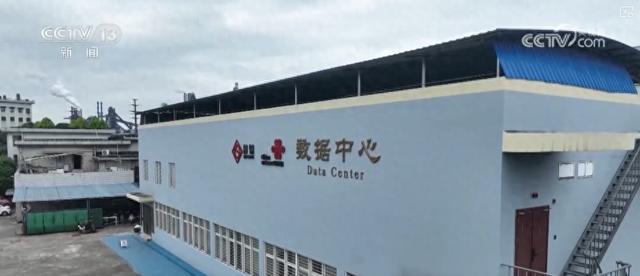
Zhao Ce, Deputy Director-General of the Department of Information and Communication Development at the Ministry of Industry and Information Technology, announced that 207 cities nationwide have currently been designated as "Gigabit Cities," with the number of gigabit users exceeding 210 million; the goal of achieving "gigabit connectivity in every county" has now been realized.

Zhao Ce stated that the Ministry of Industry and Information Technology will continue to advance gigabit optical network coverage in urban areas, while extending these networks to townships and rural regions on an as-needed basis, thereby fostering coordinated and balanced regional development. Furthermore, the Ministry will accelerate the deep integration of gigabit optical networks into vertical sectors such as intelligent manufacturing, smart transportation, energy, and culture and tourism.
Concurrently, pilot programs for 10-Gigabit optical networks must be advanced in an orderly manner to accelerate the resolution of key challenges and bottlenecks regarding their practical implementation. This effort aims to foster the establishment of a mature industrial chain and a comprehensive ecosystem for 10-Gigabit optical networks. my country Enters a New Phase of Gigabit Popularization and 10-Gigabit Pilot Programs.
Across the country, 168 residential communities, factories, and industrial parks—spanning 86 cities—are actively conducting pilot trials for 10-Gigabit optical networks. As the optical network industry accelerates its evolution from "Gigabit" to "10-Gigabit" capabilities, my country is entering a new phase characterized by the widespread popularization of Gigabit networks alongside the piloting of 10-Gigabit technologies.
Li Shaohui, Director of the Broadband Services Department at the Institute of Technology and Standards within the China Academy of Information and Communications Technology (CAICT), announced that my country will systematically advance the pilot deployment of 10-Gigabit optical networks, thereby accelerating the evolution of network infrastructure toward ultra-high speeds, massive capacity, and intelligent capabilities. It is projected that during the 15th Five-Year Plan period, technologies enabling Gigabit-level access will emerge as the mainstream standard. Moving forward, key technologies for 10-Gigabit optical networks will first undergo pilot testing in select cities; through these demonstration initiatives, the gradual pilot application of 10-Gigabit optical networks across the country will be driven forward.
According to Li Shaohui, the recently concluded "Guanghua Cup" Gigabit Optical Network Application Innovation Competition—held in Nanning, Guangxi—marked a significant milestone: for the first time, 13 application cases utilizing 10-Gigabit optical networks advanced to the national finals. The Ministry of Industry and Information Technology (MIIT) recently launched a pilot program for the construction of 10-Gigabit optical networks. The initiative plans to conduct technical verifications for next-generation broadband networks across 30 provinces, autonomous regions, and municipalities nationwide over an eight-month system deployment period, thereby laying a solid foundation for advancing the development of these 10-Gigabit pilot projects. Upgrading to 10-Gigabit: New Network Infrastructure Empowers a Multitude of Industries.
Currently, Gigabit optical networks are playing an empowering role across a wide spectrum of sectors—including industry, education, healthcare, energy, and agriculture—giving rise to numerous exemplary cases of innovative applications. These networks have already extended their reach to 87 of the 97 major categories within my country's national economy. With the official launch of the 10-Gigabit optical network pilot program, existing Gigabit application projects have now begun the process of upgrading to 10-Gigabit capabilities.
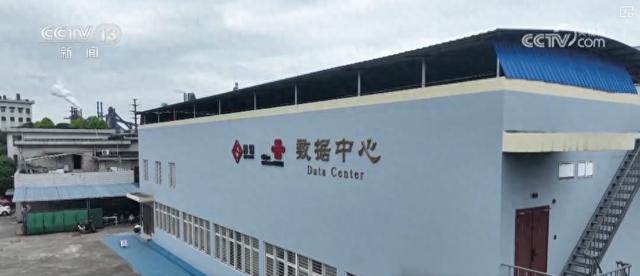
The Hot Rolling Plant of Liugang Group represents one of China Telecom’s inaugural "10-Gigabit Factory" projects in Liuzhou, Guangxi. This system is capable of supporting millisecond-level data backhaul for over 2,000 4K cameras deployed across the facility, thereby effectively ensuring the precision of rolling mill controls and the stability of data transmission. By integrating with an AI-driven quality inspection system, the solution also enables intelligent monitoring across the entire production workflow—a capability that has not only substantially reduced steel production costs but also significantly shortened product delivery cycles.
In Chengdu, Sichuan, a computing power resource pool established by China Mobile leverages a 10-gigabit optical network to aggregate various rendering software and integrate computing and network resources, thereby providing the film and television industry with a high-speed, convenient "one-stop cloud-based production platform." By utilizing the platform's cloud-based generation and rendering capabilities, film and animation production studios have effectively resolved the challenge of enabling multiple teams to collaborate efficiently on a single platform.
NAVIGATION
Send Us A Message