
Civilian and Commercial Applications of Fiber-Optic Drones
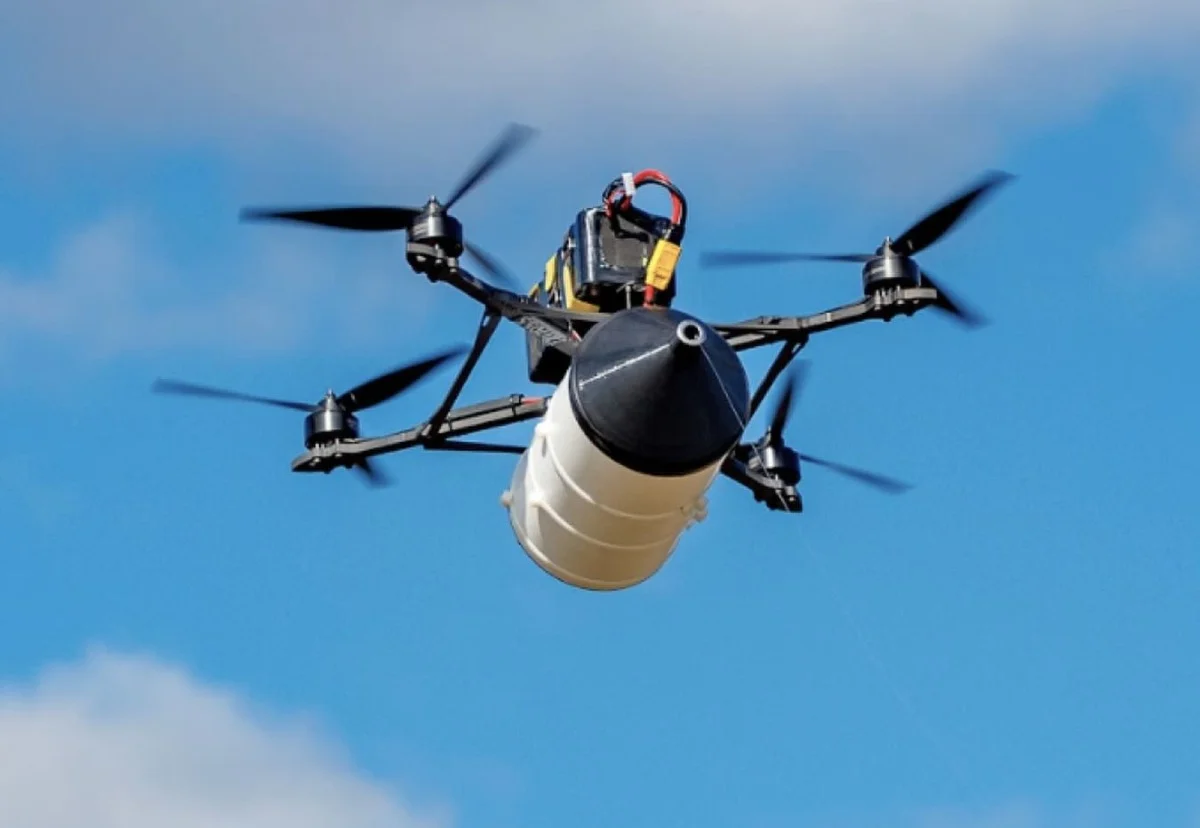
While war has been the catalyst for fiber-optic drone innovation, the technology holds considerable promise for civilian and commercial applications that demand secure, reliable drone communication. Here are some key use cases emerging or envisioned:
Critical Infrastructure Inspection: Fiber-optic tethered drones can be a boon for inspecting infrastructure like bridges, power lines, pipelines, and tunnels. Normally, remote-controlled drones might struggle in enclosed or RF-blocking environments (imagine a drone flying deep under a bridge deck or inside a long pipeline where radio signals can’t penetrate). A fiber-optic tether ensures the drone remains in contact no matter the surroundings. Before the war, tethered robots were already used in mines and sewers for this reason. Now companies are adapting aerial drones with fiber control to inspect hard-to-reach industrial installations. The tether provides not only a jam-free link but can transmit high-definition sensor data (thermal camera footage, LIDAR scans, etc.) in real time to engineers. Because there is no radio emission, these systems can even operate safely in environments where radio use is restricted (such as near sensitive electronics or in explosive atmospheres where radio signals might trigger a hazard). In short, fiber drones could improve the safety and effectiveness of infrastructure monitoring by keeping pilots in control under conditions where normal drones fail.
Telecommunications and Disaster Response: A very practical use of fiber-tethered drones is as temporary telecom towers in emergencies or large events. Giant telecom providers have already tested drones that act as flying cell towers (the AT&T “5G Flying COW” being a notable example). Typically, these are tethered to a ground vehicle with a combined power/fiber line. The drone hoists a small cellular base station or radio relay into the air, and the fiber-optic tether channels data back to the network. This setup was successfully used to restore phone service after hurricanes and to boost coverage at events where networks were overloaded. Fiber ensures a high-bandwidth, low-latency backhaul to the drone, effectively making it an aerial extension of the fiber network. In the future, such drones could also beam internet connectivity into remote areas – think of it as a quicker-deployed alternative to erecting a cell tower or laying temporary fiber on the ground. Tethered drones could hover for days, powered from the ground, providing critical communication links after natural disasters or in rural communities. Telecom companies and even militaries (for field communications) are exploring this “tower-in-the-sky” concept, leveraging fiber’s reliability.
Media & Live Broadcasting: Live aerial broadcasting demands not just great camera work but a stable, high-capacity uplink – something fiber can uniquely provide. Broadcasters have started using tethered camera drones for covering sports, concerts, and news events. A fiber tether allows streaming 4K live video with zero wireless interference. For instance, a news station could deploy a tethered drone over a protest or parade and get uninterrupted footage even if the airwaves are congested with mobile signals. The tether also circumvents radio signal restrictions that might be in place around certain events or locations. By ensuring a direct fiber feed of the video to the production truck, broadcasters avoid latency and signal dropouts that can plague traditional drone links. This results in more reliable and higher-quality live shots from the air. The only limitation is the drone must remain within the tether’s reach, but for many events a 1–2 km fiber line is sufficient.
Scientific Research & Environmental Monitoring: Researchers are beginning to use tethered drones to monitor environments where stable data flow is critical. For example, environmental scientists could hover a fiber-linked drone over an active volcano or deep inside a forest canopy to gather continuous readings of gas concentrations, temperature, or wildlife activity. The fiber link ensures that large datasets (from HD cameras or multi-spectral sensors) stream back in real time without loss. In one scenario, a drone could remain aloft over a forest fire (powered via tether) to act as a persistent observation node, with fiber carrying infrared video and sensor data through the smoke (which might block radio). Similarly, in urban planning or construction, tethered drones might be used to monitor sites or traffic with guaranteed data security – city authorities could get a live bird’s-eye view without concerns of someone intercepting or jamming the feed. Even law enforcement could employ fiber drones for surveillance during critical operations where jamming is a concern (e.g. hostage standoffs or VIP security, ensuring the drone feed can’t be knocked out by criminal jammers). The high reliability of fiber communication is attractive wherever lives or valuable data depend on a drone’s connection.
Logistics and Delivery (Experimental): An intriguing offshoot is using fiber-optic guidance for drone delivery in RF-challenged environments. While most delivery drones rely on GPS and radio, one could imagine a scenario like delivering supplies into a radio-silenced tunnel or through an urban canyon under jamming. Ukraine’s military already demonstrated fiber-controlled ground robots delivering ammo to soldiers at the front. Aerial delivery via fiber drone is trickier due to range limits, but specialized use-cases (like moving medical supplies across a contested zone where GPS is jammed) could arise. For now, this remains speculative, but it underscores that fiber-optic control can fill niches where conventional drone navigation is unreliable.
In summary, fiber-optic drone systems provide a secure, interference-free link that appeals to many civilian sectors. Whenever the stakes are high for maintaining a drone’s connection – be it broadcasting the World Cup live or inspecting a nuclear power plant – fiber tethering offers peace of mind that no radio glitch or malicious jammer will cut the feed. As one fiber optics supplier put it, this approach is “revolutionizing drone operations” by ensuring secure high-speed communication in critical scenarios. We can expect to see more crossover from the military advancements into civilian drone services in coming years.
NAVIGATION
Send Us A Message