
News
Tactical Advantages on the Battlefield
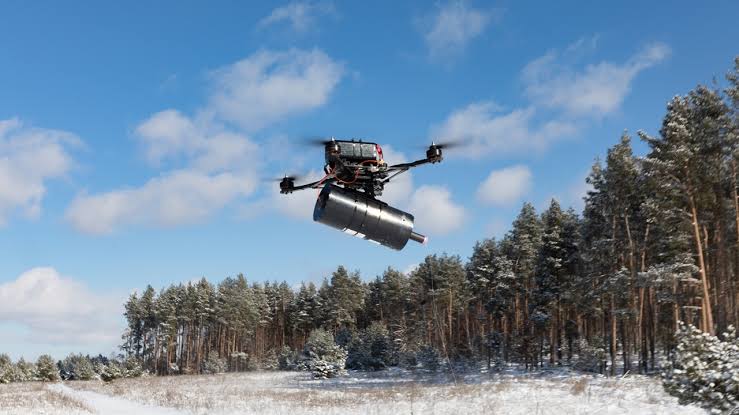
Why are fiber-optic drones so disruptive in combat? Many of the reasons mirror the technical points already discussed, but in a wartime context the following advantages stand out:
Electronic Warfare Resilience: Simply put, fiber-optic drones restored reliable drone operations in the face of intense electronic warfare. All those expensive jamming systems that both sides deployed became far less effective overnight. “Fiber-optic drones essentially rendered those jammers useless,” as one analysis noted. Armored vehicles that once traveled with electronic countermeasures to fend off radio-guided kamikaze drones found themselves naked against fiber drones, which could swoop in unperturbed. Soldiers described scenarios in which multiple radio-controlled drones in an area would inadvertently jam each other or get jammed by friendly systems – a chaos that fiber control neatly sidesteps. By 2025, certain frontline units considered the fiber drone “the weapon shaping entire operations”, akin to how dominant artillery barrages shape battles.
Low-Altitude, Covert Approach: Fiber drones can fly extremely low to the ground or through obstacles without losing connection. This means they can hug terrain, fly between buildings, or even navigate trenches – making them very hard to spot or hit until it’s too late. Traditional drones often had to stay a bit higher to maintain line-of-sight for radio; fiber drones have no such limitation. Ukrainian troops learned this the hard way: previously, they could take cover under trees or remain safe behind a hill from most drones, but fiber FPVs now come skimming through woods and around obstacles as long as the cable can follow. One Ukrainian unit noted that areas that used to be safe from drones – forests, indoor hideouts – are no longer safe. A fiber drone operator can literally chase a target around corners or into bunkers, maintaining control the whole way. The only effective counter is physical destruction of the drone; as a U.S. defense expert observed, “the only way to stop such a drone is to shoot it out of the sky”.
Precision and Lethality: The combination of a first-person view (FPV) camera and unbroken high-quality video feed gives fiber drones precision strike capability on par with some guided missiles, but at a fraction of the cost. Operators can steer the drone right into weak points of a target. In Ukraine, both sides commonly strap explosives (like anti-tank grenades or modified RPG warheads) onto these drones. They essentially become flying shaped charges, aimed with the precision of a video-guided munition. They have been used to disable tanks by hitting engine decks, to drop into trenches and foxholes, and even to fly through open windows to detonate inside buildings. A fiber drone carrying only a kilogram of explosives can be more deadly than a mortar shell if piloted into the ideal spot. Soldiers have described them as “kamikaze FPV” drones—cheap but effective one-way weapons. Indeed, what makes them terrifying is that for a few hundred or few thousand dollars, they can achieve effects that previously might require a precision-guided missile costing 50x more. This democratization of smart weapons is a tactical revolution. In the West Africa and Middle East theaters, there are reports of FPV drones (likely radio ones for now) being used in a similar fashion, and the fiber upgrade would make them even harder to counter.
Force Multiplication and Psychological Impact: The presence of fiber drones forces the enemy to alter behavior significantly. Troops have to assume any quiet drone they hear could be fiber-guided and thus unjammable, meaning they must shoot it or hide. Vehicles can’t move freely on roads if fiber drones are known to be in the area, causing supply and evacuation delays as seen in Kursk. The psychological effect is considerable – knowing that the enemy has “invisible leash” drones that your electronic defenses can’t stop can be demoralizing. Ukrainian fighters recounted how in one battle, even veteran drone operators felt outmatched because they were still using radio drones while the enemy had fiber ones picking them off. On the flip side, when Ukrainian units obtain fiber drones, it boosts their confidence. A commander in Ukraine’s Azov brigade stated, “We will find a countermeasure-resistant FPV drone to break through any [enemy] electronic warfare system”, referring to their use of fiber FPVs in combat. Both sides now see these drones as must-have kit. The Washington Post quoted Andrew Coté (a former U.S. defense official and now drone industry expert) saying “What we’re seeing in Ukraine is a revolution in uncrewed warfare” driven by innovations like fiber-optic drones.
Cost Efficiency: While fiber drones are a bit more costly than standard FPVs, they are still far cheaper than traditional military hardware that achieves similar effects. For the price of one guided anti-tank missile, a military could field a dozen or more fiber-optic kamikaze drones. This cost-effectiveness means even smaller military units or less-funded forces can adopt them, potentially leveling the playing field against a more equipped adversary (as long as they can source the fiber and drones). Ukraine produces some of its fiber drones for roughly $1000–$2000 each, using many off-the-shelf parts, which is extraordinary considering their impact.
NAVIGATION
Send Us A Message