
Military and Defense Use of Fiber-Optic Drones
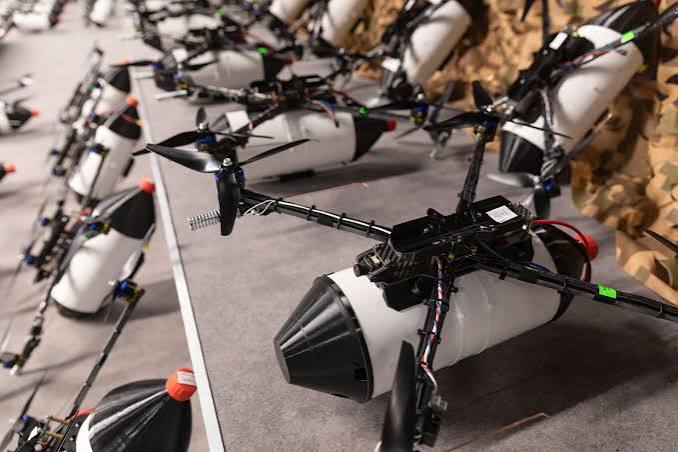
On today’s battlefields – whether in Ukraine or potential future high-tech conflicts – electromagnetic spectrum dominance is key. Jamming units, anti-drone rifles, and electronic deception systems have proliferated to counter the massive use of off-the-shelf drones. Regular consumer-type drones or FPVs, which rely on radio links (2.4 GHz, 5.8 GHz, etc.), were relatively easy prey for electronic warfare: by mid-war, both Russian and Ukrainian troops equipped vehicles and positions with powerful jammers that could bring down or “blind” enemy quadcopters in mid-flight. This cat-and-mouse dynamic led to many drone missions failing due to signal loss. Militaries tried workarounds like pre-programmed flight routes (drones flying to GPS coordinates autonomously to deliver a bomb), but those are inflexible when targets move. The need for a live pilot controlling the drone in real time – without being jammed – became painfully clear. Fiber-optic control was the answer.
Russia was the first to deploy fiber-optic FPV drones in combat, giving its units a surprise edge. According to multiple reports, Russian forces began using experimental fiber-guided kamikaze drones by early 2024. One early model, dubbed “Knyaz Vandal Novgorodsky,” was developed by a Russian volunteer tech group and fielded around August 2024 during fighting in the Kursk region. This drone carried a roughly 10 km fiber spool and proved devastatingly effective at sneaking up on Ukrainian troops and vehicles that thought they were safe under the cover of Russian jamming. Ukrainian soldiers described their logistics collapsing in that incursion – “fiber optic drones were monitoring all routes, leaving no way to deliver ammunition or provisions”, recalled one medic. Indeed, Russia’s tethered FPV drones began to cripple Ukrainian supply lines and frontline positions by late 2024. By hitting trucks on roads and even chasing individual soldiers into dugouts or buildings, these drones created an atmosphere of constant danger. A Ukrainian drone platoon commander in Kursk noted that by March 2025, so many vehicles were being destroyed on the last supply road that evacuations and resupply had to pause whenever the weather was clear (clear skies meant the drones would be out hunting). Only heavy rain or fog grounded them, giving brief respite.
The Russians refined both their tactics and technology. By early 2025, they had formed specialized drone units (with ominous code-names like “Rubicon” and “Sudny Den”) experienced in fiber-optic FPV operations. These units were redeployed to hotspots in eastern Ukraine to spearhead offensives with swarms of fiber-guided drones. Technically, Russian developers opted for higher-end components: using longer-wavelength fiber optics (1490–1550 nm) for lower signal loss over distance, digital HD cameras with custom software, and robust fiber transceivers. This gave Russian fiber drones a remarkable range and success rate – they achieved up to 20–30 km reach, with internal assessments claiming ~80% probability of a successful strike at 20 km. By contrast, Ukraine’s early makeshift fiber drones (often using shorter 1310 nm wavelength links and repurposed analog cameras) struggled beyond 10–15 km, with success rates reportedly under 30% at those distances. In essence, Russia’s investment in quality hardware paid off in more reliable long-range drones. The Washington Post noted that Russian fiber-optic drones “have a range of up to 12 miles” (~19 km) and have been used to destroy Ukrainian equipment and choke off key routes. Ukrainian troops admitted that in one engagement, the Russian fiber drones “vastly outnumbered” Ukrainian drones, causing movement to become so risky that some units were left stranded without food or ammo.
Ukraine, for its part, pioneered many drone tactics earlier in the war and was quick to respond to this new threat. As soon as Russia’s use of fiber drones became apparent in Spring 2024, Ukrainian developers scrambled to prototype their own versions. By mid-2024, Ukraine’s Ministry of Defense put out urgent calls to domestic drone makers that fiber-optic FPVs were “very much needed” and promised to procure them in quantity. Hackathons and innovation challenges that had initially dismissed the tethered drone idea now embraced it, given the battlefield evidence. By late 2024, Ukraine had at least a few fiber-optic attack drones in action. One International Legion pilot described a mission in Fall 2024 where his fiber-linked drone, carrying a 1.6 kg warhead, flew straight into a cellar hiding Russian soldiers – all while Russian jammers blared ineffectively. The drone’s perfect video feed let him navigate into the underground target that no radio drone could have reached, resulting in a successful strike and “huge implications” for future ops. “That first time I used the fiber optic, I never wanted to go back,” he said of the experience. By early 2025, dozens of Ukrainian engineering teams—bolstered by government tech programs like the Brave1 initiative—were developing fiber-optic drones or components. The Ukrainian Armed Forces held a high-profile demonstration of fiber-controlled FPV drones in December 2024, showcasing over a dozen models to senior officers (some able to carry up to 3 kg payloads, indicating larger drone frames). Production began ramping up: by mid-2025, at least 15 Ukrainian companies were manufacturing fiber-optic drones, with another 20 making the specialized spool reels, according to Digital Transformation Minister Mykhailo Fedorov. Even so, Ukraine has been playing catch-up. Frontline units report that only a small fraction of their drones are fiber-equipped (<5% in one special forces brigade as of Spring 2025) due to limited supply and backlogs for the high-quality systems. Top Ukrainian manufacturers have long waiting lists, and cheaper imports proved unreliable early on, causing some setbacks.
NAVIGATION
Send Us A Message