
The Ukraine Conflict: A Case Study in Fiber-Optic Drone Warfare
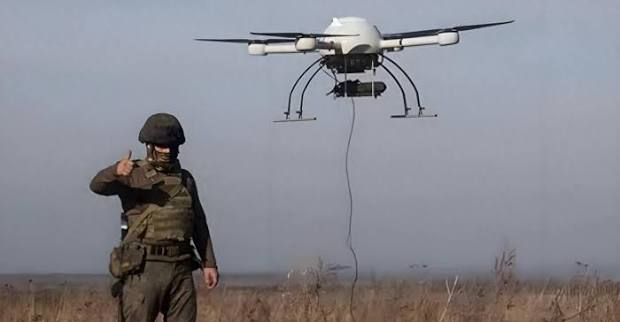
Nowhere has the impact of fiber-optic drones been more visible than in the ongoing Ukraine war. This conflict offers a stark illustration of both the potential and the limitations of the technology in modern combat. Here we focus on how fiber-optic drones have been used by Ukraine and Russia, their tactical advantages in this specific war, the innovations spurred by the conflict, and the lessons learned.
Tactical Advantages in Ukraine: Ukraine’s battles have provided near-perfect conditions for fiber drones to shine: both sides deploy extensive electronic jamming, often rendering traditional drone controls useless. In this environment, fiber drones became “indispensable” on the front lines by 2025. For Ukrainian units defending urban ruins or wooded trenches, the ability to fly drones under the enemy’s electronic shadow was a lifesaver. Soldiers recount using fiber FPVs to hunt tanks and dug-in troops even in areas saturated with Russian EW signals. The drones’ low flight profile allowed strikes that were previously impossible – for example, creeping along a tree-lined road and hitting an armored vehicle from behind foliage cover. Ukrainian Special Forces in the Azov brigade have deployed fiber drones in the fiercely contested Donetsk region, where a commander noted they specifically used these “countermeasure-resistant” drones to penetrate Russian electronic defenses in the Toretsk sector. The payoff was clear: whenever a fiber drone successfully hit a high-value target, it accomplished something that dozens of radio-controlled drones could not in that jamming-heavy zone. Conversely, Russia used fiber drones to blunt Ukraine’s offensives. During Ukraine’s incursion into Russia’s Kursk region (winter 2024–25), Russian forces blanketed the area with fiber FPVs, making any movement extraordinarily costly. Ukrainian fighters described cars returning from the front “covered in webs of thin, translucent cables”, and infantry literally tripping over leftover fibers – grim evidence of how thoroughly the area was patrolled by these drones. Russian fiber drones were credited with helping sever the “road of life” supply route in the Kursk fight, directly contributing to Ukraine’s retreat from that salient. A Ukrainian officer said that once the last road was lost (largely due to relentless drone attacks), “Ukraine’s eventual retreat… was only a matter of time.” In essence, fiber drones enabled a form of aerial ambush: unseen drones lurking and waiting to pounce on any target that moved, with no electronic warning.
Operational Limits and Workarounds: The Ukraine conflict also exposed the limits of fiber-optic drones. Range was an issue – early Ukrainian models could not match the reach of Russian ones, causing a disparity in engagements. As noted, some Ukrainian long-range attempts (~15 km) initially had poor success (<30%), whereas Russian drones at 20 km still performed well ~80% of the time. Ukrainian developers like Alexey Babenko openly stated that their fiber FPVs were “not as successful as Russian ones” at long distances, citing only ~30% success at 15 km vs. 80% for Russian at 20 km. This gap spurred Ukraine to upgrade fiber quality and control systems, a process that is ongoing. Another limit was supply – Ukraine simply didn’t have enough fiber kits early on. As one special forces commander “Yas” explained, the best Ukrainian fiber drones had long waitlists due to high demand, and units often had <5% of their drone fleet equipped with fiber at any time. This meant commanders had to reserve fiber drones for the most critical missions. To maximize impact, Ukrainian forces often used fiber drones in combination with other tactics: for example, they might fly a cheap radio drone first to draw enemy jamming or attention, and then send in the stealthy fiber drone along a different path while the enemy is distracted. There were also creative field innovations – Ukrainian technicians in the 92nd Brigade’s “Achilles” company built fiber drones in three sizes (short, medium, long range) and learned that sometimes smaller was better. “The bigger the distance, the bigger the coil; the bigger the coil, the bigger the drone… the more likely it is to be shot down,” noted Commander Yuriy Fedorenko. His team adjusted by using just enough range for a given target, keeping drones smaller and harder to hit. They also implemented things like automatic cable tensioning and smoother spooling to avoid knots. Maintenance teams were trained to handle the delicate fiber – “even a speck of dirt on a cable could mean the difference between life and death,” as one repair specialist put it. These details highlight that for all their high-tech aspects, fiber drones require careful hands-on work (cleaning cables, checking reels) in the field.
Innovations from the Conflict: The rapid back-and-forth drone duel in Ukraine has led to several innovations. Ukraine has reportedly developed drones that can automatically revert to backup control modes if the fiber is cut – e.g., switching to a pre-programmed GPS route or re-establishing a radio link for return-to-base. This kind of redundancy could save drones that otherwise would crash if the tether breaks. Another innovation is the move to better fiber materials: early on, many drones used glass optical fiber (GOF) which is thin but can be brittle. Now there’s more use of polymer optical fiber (POF) which is lighter, more flexible, and can be longer (though it may have more signal loss). POF also avoids glass shards if it breaks, which is a minor safety improvement. Both sides have experimented with different thickness and coatings for the fiber – some Russian cables are slightly thicker (few mm) and even more robust, at the cost of visibility (thicker cables glint more and are easier to spot hanging from trees). Ukraine’s tech sector, with support from Western partners, is also exploring AI-assisted targeting for fiber drones. This would entail using on-board image recognition to help lock onto targets or stabilize flight, reducing the burden on the pilot. If successful, it could mitigate the skill gap and potentially allow one operator to control multiple drones or handle longer missions with less fatigue. The war has essentially become a drone laboratory, and fiber-optic control is one of the standout experiments.
Use by Both Sides (Symmetry and Asymmetry): Interestingly, fiber-optic drones have been a rare case where Russia leaped ahead first, and Ukraine followed – reversing the general trend of Ukraine’s agile tech adaptations. By mid-2025, both sides acknowledge the other’s capabilities. Russia deploys fiber drones in both defensive and offensive roles: defensively, to guard areas by loitering over them and offensively, to spearhead attacks and knock out Ukrainian strongpoints. Ukraine uses them more sparingly (due to scarcity) but often in high-payoff strikes like taking out important Russian armor or artillery that is heavily defended by jammers. Ukrainian forces also likely use fiber drones for certain reconnaissance missions, e.g., sneaking a camera drone close to a Russian position to gather intel where a normal drone would get jammed. Because fiber drones are harder to come by, Ukrainian units have at times had to coordinate – sharing the few fiber-equipped drones between units as needed. Russia’s more centralized approach meant when they massed fiber drones, they could truly blanket an area (like Kursk) to overwhelm Ukrainian defenses. That asymmetry is slowly diminishing as Ukraine produces more and gets foreign aid to boost numbers, but it’s a race. Both sides are also adapting countermeasures as discussed, like radars specifically tuned for small drone detection and more trigger-happy air defense for anything that buzzes.
Expert Commentary: Military experts worldwide have taken note of the Ukraine drone war as a preview of future conflicts. “Ukraine has become a testing ground for the latest developments in battlefield technology,” noted one U.S. defense industry observer, and fiber-optic drones are perhaps the clearest example. Retired officers have compared the proliferation of cheap drones to the introduction of machine guns or tanks – a new technology that changes tactics fundamentally. The difference here is many of these innovations are coming from volunteer teams and rapid prototyping, not traditional defense contractors. Observers like Samuel Bendett (an expert on Russian unmanned systems) and others on social media have been tracking the “FOG (Fiber-Optic Guided) drones” closely. Bendett highlighted creative incidents like a drone cutting another’s cable mid-air, illustrating the strange new kinds of encounters happening in this war. The Atlantic Council has warned that Russia’s focus on fiber drones, combined with high production, could give it a sustained edge if Ukraine and allies don’t respond in kind. They recommend channeling more investment specifically into fiber-optic drone development for Ukraine. On the Ukrainian side, Minister Fedorov and other leaders frequently speak about the “dronization” of the war and how every infantry platoon now effectively needs its own drone section. Fiber-optic drones are seen as a critical part of this new structure. Fedorov noted that about 10% of Ukraine’s new drones in production by spring 2025 were fiber-optic equipped, and that share is rising as demand soars.
In summary, the Ukraine conflict’s experience with fiber-optic drones underscores their transformative power – these drones have altered how offensives are conducted, how defenses must be organized, and how militaries allocate resources (more to drones, less perhaps to some traditional arms). At the same time, the war reveals the tech’s nascent flaws – reliability issues, environmental impact, and the constant move-countermove as each side tries to negate the other’s advantage. Lessons from Ukraine are already informing NATO militaries and others on what to expect if they face a high-tech adversary. We turn next to how global forces and industries are reacting, and what the future may hold for fiber-optic drone technology beyond this specific war.
NAVIGATION
Send Us A Message