
Key Players: Manufacturers and Countries Advancing Fiber-Optic Drones
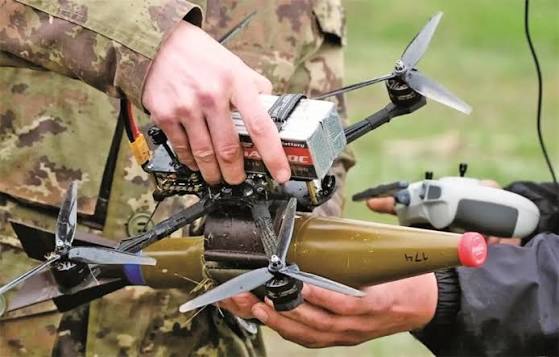
The sudden prominence of fiber-optic drones has spawned an ecosystem of manufacturers, innovators, and adopters across the world. Here we highlight some of the key players and countries involved in developing or using this technology:
Ukraine: Ukraine’s vibrant tech and defense sector has produced numerous drone startups and volunteer makers. At least 15 domestic companies are now building fiber-optic drones or conversion kits. Some notable names include Dronarium (which developed a prototype hexacopter with fiber control and an auto-switch to GPS on cable break), BattleBorn (reports of models carrying up to 8 kg of explosives via fiber link), and others operating under the Brave1 coalition. The Ministry of Defense’s Innovations department actively supports these efforts, organizing demos and trial purchases. Ukraine’s advantage is a highly motivated pool of engineers and external funding from donors; its challenge is scaling production while fighting a war. Key individuals like Mykhailo Fedorov (digital minister) and Yuriy Fedorenko (Achilles drone unit commander) are leading voices pushing for more investment in fiber drones. Ukraine is also working with Western partners to get specialized fiber components and build local capacity to manufacture the spools and transceivers that were initially all imported.
Russia: Russia was the early mover, with groups like Ushkuinik (a volunteer tech collective) developing the first fielded fiber FPV drone (Knyaz Vandal). Since then, larger state-backed manufacturers may be involved, though much of Russia’s drone effort relies on dual-use components (often imported covertly due to sanctions). Units like the Lancet loitering munition’s manufacturer (Zala Aero) might integrate fiber guidance in future versions, though Lancet currently uses radio. Russia has benefited from Chinese suppliers providing vast lengths of fiber-optic cable and possibly ready-made spools. This supply chain has enabled mass deployment. Chinese-made FPV drones (like those based on model aircraft) could be modified with fiber by Russian teams relatively easily, essentially giving Russia an unlimited hardware pipeline as long as it can get the fiber lines. According to analysts, Russia’s approach has been to focus resources on a few drone types (Shahed kamikaze drones, Lancet, and now fiber FPVs) and produce them in large volume. By mid-2025, Russian forces are using fiber drones in multiple fronts and reportedly have designs with up to 30–40 km cables, one report even mentioned a 41 km spool used in testing. Key figures like Deputy PM Yuri Borisov and defense industry officials have touted investment in UAVs as a priority; though specifics on fiber-optic variants are often kept under wraps, Russian military bloggers regularly share footage boasting of unjammable drone strikes.
China: While not confirmed to use fiber drones in combat, China is a major supplier and potential developer. Chinese companies dominate the global fiber-optic cable market, which indirectly supports whoever is buying cables (both Russia and Ukraine have sourced Chinese fiber). Chinese drone makers have also surely observed the Ukraine war’s trends. A Chinese drone company, if it chose, could integrate fiber-optic control into its designs and market them as “anti-jam” drones to interested militaries. So far, no public evidence of PLA (Chinese military) fiber drone units exists, but China tends to study foreign conflicts for tech lessons. If tensions rise (e.g., a Taiwan scenario), the PLA might employ fiber drones as a countermeasure to U.S. electronic warfare. Some Chinese firms (like the one behind CommMesh article) are openly advertising fiber-optic drone communication solutions, indicating commercial interest. It would not be surprising if Chinese engineers are quietly prototyping fiber-guided versions of their loitering munitions or quadcopters for future use or export.
Israel: Israel has a history of advanced UAV tech and was an early adopter of fiber-optic guidance in its Spike family of anti-tank missiles. Israeli companies could theoretically translate that expertise to drones. However, Israel has been cautious about the proliferation of certain drone tech, and it has not publicized any fiber-optic drones in service. Still, Israeli defense analysts will note how Hezbollah or others could use jam-proof drones in a future conflict, so their industry may quietly invest in protective measures or their own versions. Israeli firms (like Rafael, IAI) already make drone electronic warfare systems; they might add fiber-tethered recon drones as a complementary product.
Others: Many other countries will be influenced by this trend. Turkey, which saw success with its Bayraktar TB2 drone (radio-controlled) in earlier phases of the Ukraine war, might explore fiber guidance for smaller tactical drones to maintain its edge in future high-EW environments. Iran, known for supplying drones (mostly GPS/radio guided) to proxies, could incorporate fiber optics if it deems it useful for penetrating Israeli or Saudi electronic defenses. European nations (France, UK, Germany) have projects on advanced drones and could integrate lessons; for example, a French arms company might design a fiber-optic anti-tank drone to complement their missile line. India and Pakistan in their constant modernization may look at fiber drones for border scenarios where jamming could be prevalent. In essence, any military that anticipates fighting an enemy with sophisticated electronic warfare will consider adding fiber-optic drones to its toolbox after seeing Ukraine. Conversely, those militaries are also now working on countermeasures, as discussed.
On the manufacturing side, apart from drone assemblers, the specialty cable manufacturers are key. Companies like W. L. Gore & Associates and Linden Photonics produce lightweight hybrid cables for tethered drones (power + fiber) for Western clients. In China, firms like Hunan Jiahome advertise fiber cables for drones to overcome radio horizon limits. The demand for ultra-thin, tough fiber-optic spools is likely to surge. We may see new startups focusing solely on drone tethers (like how some now produce just drone parachutes or just engines). There’s also a potential niche for retrievable tether systems – devices that spool the fiber back up if the drone returns, allowing cable reuse and less litter. Such systems exist for tethered power drones, but for one-way kamikaze drones it’s moot.
In summary, Ukraine and Russia are the current pioneers on the battlefield, but an array of global players – from Western defense firms to Chinese suppliers – are now involved in pushing fiber-optic drone tech forward. It’s a rapidly evolving landscape as everyone digests the lessons of recent combat.
NAVIGATION
Send Us A Message